
Upstart personal loan: how to apply step by step
Finding the right personal loan involves more than comparing advertised interest rates. Whether you’re consolidating credit card debt, financing home improvements, or covering a major expense, understanding approval requirements and borrowing costs can help you avoid an expensive financial commitment.
Upstart offers an online lending platform that connects borrowers with banks and credit unions. Its technology-driven underwriting process evaluates multiple financial indicators to help participating lenders determine eligibility, loan amounts, and repayment conditions.
If you’re considering an Upstart personal loan in 2026, understanding the application process before submitting your information can make a meaningful difference. From checking your potential APR to reviewing origination fees, each stage deserves careful consideration.
How Upstart personal loans work
Upstart is a lending marketplace rather than a traditional bank. Its platform connects eligible borrowers with financial institutions that issue personal loans. The application process takes place online, with technology helping evaluate applicants based on factors such as income, credit history, and overall financial circumstances.
Personal loans through Upstart generally range from $1,000 to $75,000, depending on state restrictions and individual eligibility. Traditional unsecured offers commonly feature fixed interest rates and repayment periods of three or five years. Qualified applicants may also encounter an auto-secured option, which involves different collateral risks.
One notable feature is the ability to check potential loan rates without affecting your credit score. However, receiving an initial offer does not guarantee final approval, and completing a formal application may trigger a hard credit inquiry.
Eligibility requirements for an Upstart personal loan
Understanding lender requirements before applying can reduce unnecessary applications and help borrowers evaluate whether a new financial obligation fits their circumstances.
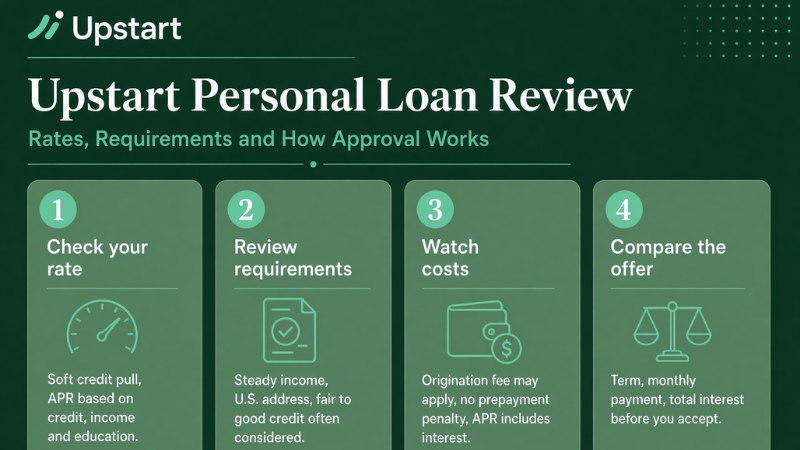
Upstart’s lending partners consider several factors when determining eligibility:
- Credit history and repayment behavior: Previous loan payments, outstanding balances, and overall credit management influence risk assessments. Applicants with limited credit histories may still be considered, but approval is never automatic.
- Income and employment information: Lenders generally need evidence of sufficient income to support the requested monthly payment. Depending on individual circumstances, applicants may be asked to verify employment, self-employment earnings, or other acceptable income sources.
- Debt-to-income ratio: Existing credit card balances, installment loans, and other recurring debt payments affect borrowing capacity. A higher debt burden can reduce the amount available for a new loan.
- Identity and residency: Applicants must satisfy applicable identification, age, residency, and other legal eligibility requirements. Product availability also depends on the state where the borrower lives.
- Requested financing amount: The lender evaluates whether the desired loan amount is consistent with the applicant’s income, creditworthiness, and ability to repay.
Meeting basic eligibility conditions is only the starting point. Final financing terms depend on the lender’s underwriting process and the financial information verified during the application.
Upstart interest rates and repayment conditions
Interest rates play a central role in determining whether a personal loan represents an affordable financing option. Upstart advertises annual percentage rates ranging from 6.3% to 35.99% for qualifying unsecured personal loans, based on disclosed June 2026 pricing. Rates vary by state, lender, and borrower profile.
The annual percentage rate, or APR, reflects the annualized cost of borrowing, including interest and certain financing charges. It provides a broader comparison than the stated interest rate alone, particularly when origination fees are involved.
Choosing a longer repayment term may lower the monthly payment but increase the total interest paid. Borrowers should compare the complete repayment amount against their available monthly income rather than selecting a loan solely because the installment appears manageable.
Fees and financial costs to review before applying
An attractive loan offer can become less competitive once fees and long-term interest expenses are considered. Upstart discloses applicable charges before borrowers accept their agreements, making it important to review the complete breakdown.
Several expenses and conditions require attention:
- Origination fees: Some Upstart loan offers include a processing charge deducted from the approved principal. For example, a $10,000 loan with a 5% origination fee would provide $9,500 in net proceeds while leaving the borrower responsible for repaying the original $10,000 principal plus interest.
- Late payment charges: Missing a scheduled installment may result in fees according to the lender’s agreement. Delinquencies can also damage credit scores and create additional collection-related consequences.
- Interest over the repayment period: A fixed interest rate provides payment predictability, but the total financing expense depends heavily on the original principal and loan duration.
- Prepayment conditions: Upstart personal loans generally do not carry prepayment penalties. Borrowers who repay their balance early may reduce future interest expenses.
- Credit reporting consequences: A formal application can involve a hard credit inquiry, and missed payments may affect the borrower’s credit report.
These charges should not be mistaken for undisclosed fees. The most important consideration is whether the full contractual cost remains affordable after accounting for existing debts and essential living expenses.
Upstart personal loans versus business and home equity financing
Consumers searching for upstart for business or upstart business often want financing for a startup, equipment purchases, or working capital. However, Upstart does not currently offer dedicated business loans or traditional small-business credit lines.
Searches for upstart business loans and upstart small business loans may lead consumers toward personal borrowing as an alternative. Some participating lenders permit certain business-related uses of personal loan funds, but restrictions vary. Borrowers must confirm permitted uses before accepting an agreement, since personal liability remains with the individual.
Meanwhile, the term upstart home equity loan refers to a different financing category. Upstart Home Lending offers a home equity line of credit, or HELOC, secured by residential property. Unlike a conventional unsecured personal loan, this arrangement places the homeowner’s property at risk if repayment obligations are not met.
How to apply for an Upstart personal loan online
The Upstart application process begins with a preliminary rate check and continues through financial verification and contract review. Preparing accurate financial information beforehand can help reduce delays and improve the quality of your borrowing decisions.
Follow these steps to review and request financing:
- Visit the official Upstart website. Open the Upstart Personal Loans page and choose the option to check your rate. Confirm that you’re using the official website before entering sensitive information.
- Determine how much you need to borrow. Calculate the amount necessary for your intended expense or debt consolidation. Avoid borrowing extra funds simply because a higher limit may be available.
- Complete the preliminary application. Enter your personal details, income information, employment status, and requested loan purpose. Accurate responses help lenders evaluate eligibility and reduce potential verification problems.
- Review available loan offers. Checking your initial rate involves a soft credit inquiry that does not affect your credit score. Compare the APR, approved amount, monthly payment, repayment duration, and origination charges.
- Calculate the actual borrowing cost. Examine the net amount deposited after fees and the total payments required over the agreement. Compare competing financial institutions using APR and total repayment costs.
Completing these steps does not guarantee approval or immediate access to funds. Borrowers should retain copies of their agreements and establish a reliable repayment plan before receiving the money.
Should you use Upstart to consolidate credit card debt?
Debt consolidation is one of the main reasons consumers consider personal loans. Combining multiple credit card balances into a single installment loan can simplify monthly payments and potentially reduce interest expenses when the new APR is lower than the rates on existing accounts.
However, consolidation is not automatically cheaper. Origination fees, longer repayment periods, and the possibility of accumulating new credit card balances can offset expected savings. A comparison should include both the total repayment amount and the time required to become debt-free.
Borrowers should also consider whether reducing discretionary expenses or negotiating with existing creditors could offer a less expensive alternative. A loan can support financial restructuring, but it cannot replace disciplined budgeting.
Is an Upstart personal loan the right financial decision?
Upstart may appeal to consumers seeking an online application, fixed repayment schedules, and access to lending decisions informed by a broader financial assessment. The ability to check potential rates without an initial credit score impact also makes comparison shopping more convenient.
Potential disadvantages include substantial APRs for some borrowers, origination fees that reduce actual loan proceeds, and eligibility restrictions based on location and financial circumstances. Consumers looking for specialized business financing or property-backed borrowing should evaluate those products separately.
Before committing, compare at least a few personalized offers, review every contractual fee, and calculate how the new installment affects monthly cash flow. Protecting emergency savings and maintaining room for unexpected expenses should remain priorities.
Deixe um comentário