
How to Apply for a SoFi Personal Loan
Applying for a personal loan can be a practical way to consolidate expensive credit card balances, finance home improvements, or manage significant expenses without relying on revolving credit. Yet choosing the right lender requires more than finding an attractive interest rate. Understanding borrowing costs, eligibility requirements, and repayment conditions is essential before signing an agreement.
SoFi has become a recognizable name in digital financial services, offering unsecured personal loans through an online application process. Borrowers can explore potential loan offers, evaluate fixed interest rates, and select repayment terms that align with their financial circumstances.
If you’re considering a SoFi personal loan, knowing how the application works can help you avoid unnecessary mistakes and make a more informed borrowing decision.
Understanding how SoFi personal loans work
A SoFi personal loan provides eligible borrowers with a lump sum of money that is repaid through scheduled monthly installments. Unlike revolving credit cards, personal loans feature a defined repayment period and fixed interest rates, making monthly budgeting more predictable.
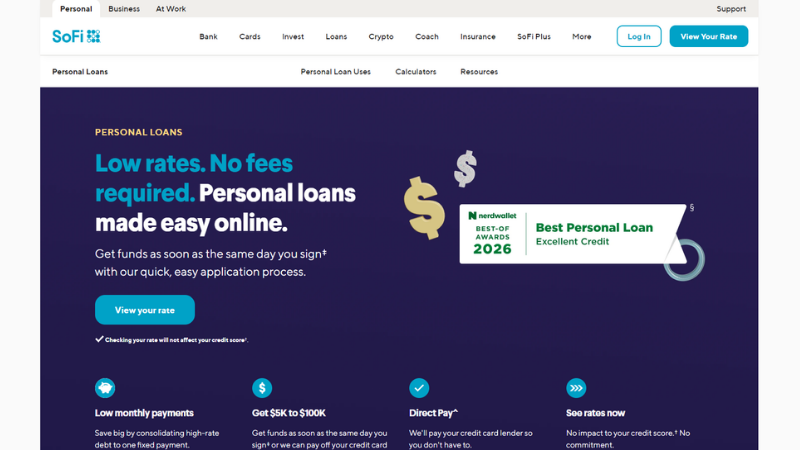
SoFi offers personal loan amounts ranging from $5,000 to $100,000, with repayment terms typically spanning two to seven years. These unsecured loans generally do not require collateral, but approval and borrowing conditions depend on an applicant’s creditworthiness, income, and overall financial profile.
The lender also provides an online prequalification process that allows prospective borrowers to explore potential rates without affecting their credit score. Final approval, however, involves additional verification and a more comprehensive credit review.
Eligibility requirements before applying for a SoFi loan
Before submitting an application, borrowers should understand how financial institutions evaluate lending risk. SoFi considers several indicators of financial stability to determine whether an applicant qualifies and which borrowing conditions may be available.
Important eligibility considerations include:
- Credit history and payment behavior: Lenders examine previous borrowing activity, outstanding obligations, and repayment consistency. A strong credit profile may improve access to competitive loan offers, while missed payments or substantial outstanding debt can influence underwriting decisions.
- Employment and verifiable income: Applicants must demonstrate sufficient financial resources to manage repayment obligations. Employment earnings and other acceptable income sources may be reviewed during the verification process.
- Debt-to-income ratio: This measurement compares recurring monthly debt payments with gross monthly income. A lower ratio can indicate greater flexibility to manage another financial obligation, though it does not guarantee approval.
- Residency and identification: Applicants must meet SoFi’s applicable U.S. residency, identity verification, and borrower eligibility requirements. Additional documentation may be necessary depending on immigration status and individual circumstances.
- Requested loan amount: The lender evaluates whether the requested financing is reasonable relative to the borrower’s financial capacity, existing obligations, and credit profile.
Meeting these considerations does not automatically result in approval. Each application is evaluated individually, and available interest rates may vary significantly between borrowers.
SoFi personal loan interest rates and repayment terms
Interest rates are among the most important factors when comparing personal loans. SoFi offers fixed-rate borrowing, meaning the contractual interest rate remains unchanged throughout the loan term.
As of September 21, 2026, SoFi advertised personal loan APRs ranging from 6.49% to 35.49%, including specified discounts. Actual offers depend on creditworthiness, income, loan duration, and other underwriting considerations. Rates can change, so applicants should verify current pricing directly with the lender.
The annual percentage rate, or APR, is particularly important because it reflects the annualized borrowing cost, including applicable origination charges. A longer repayment term may reduce the monthly installment while increasing the total interest paid over the life of the loan.
Fees, borrowing costs, and potential financial benefits
An appealing advertised rate does not necessarily represent the most affordable financing option. Borrowers should examine the complete loan agreement, including fees, repayment conditions, and any discounts that influence the final cost.
Several features deserve attention:
- Origination fees: SoFi offers options without an origination fee, but certain loan offers may include an origination charge ranging from 0% to 7%. When applicable, this fee is deducted from loan proceeds, reducing the amount actually received.
- Automatic payment discounts: Eligible borrowers may receive an interest rate reduction by enrolling in automatic payments from an approved checking or savings account. Discount availability and conditions should be confirmed before accepting an offer.
- Member benefits: Certain qualifying SoFi banking relationships or membership arrangements may provide additional rate reductions. These benefits depend on meeting the lender’s specific eligibility requirements.
- Early repayment flexibility: SoFi advertises no prepayment penalties, allowing borrowers to repay their loan ahead of schedule without a separate early payoff charge.
- Late payment considerations: SoFi advertises no late fees on its personal loans. Nevertheless, missed payments can affect credit standing, generate additional accrued interest, and potentially lead to collection activity.
Reviewing these details helps distinguish a manageable financing arrangement from one that could create unnecessary long-term financial pressure.
Does opening a SoFi account improve loan approval chances?
Consumers researching how to sofi open account may wonder whether becoming an existing banking customer improves personal loan eligibility. Opening a checking or savings account and applying for a personal loan are separate financial decisions.
A qualifying banking relationship may unlock certain pricing benefits, but maintaining a SoFi account does not guarantee loan approval or replace the lender’s underwriting requirements.
Applicants considering a sofi joint account should also distinguish between joint banking arrangements and joint loan applications. SoFi permits eligible personal loan applications with a co-borrower, but this creates shared responsibility for repayment. Adding another applicant may change the credit assessment without necessarily producing better terms.
How to apply for a SoFi personal loan online
Applying for a SoFi personal loan begins with evaluating your borrowing needs and reviewing the offers available for your financial profile. The process is completed online, reducing the need for traditional branch visits or paper applications.
Follow these steps to complete the application:
- Visit the official SoFi personal loans website. Access the SoFi Personal Loans application page and select the option to view your rate. Using the lender’s official website helps reduce exposure to fraudulent loan advertisements and unauthorized intermediaries.
- Enter your personal and financial details. Provide accurate identification, contact, income, employment, and borrowing information as requested. Incorrect or inconsistent details can delay verification or affect application outcomes.
- Check your estimated borrowing offers. SoFi generally uses a soft credit inquiry during initial rate checking, which does not affect your credit score. Review the proposed loan amounts, interest rates, and available repayment periods.
- Compare the total repayment costs. Examine the APR, estimated monthly installment, potential origination fee, and total amount repayable. Select terms based on affordability rather than focusing exclusively on the lowest monthly payment.
- Complete the formal loan application. After choosing an offer, submit the additional information or supporting documents required by SoFi. Continuing to the formal application involves a hard credit inquiry that may affect your credit score.
Applicants should retain their loan documentation and establish a repayment plan before using the borrowed funds. For additional calculations, SoFi provides an official personal loan calculator to help evaluate potential borrowing costs.
Comparing SoFi personal loans with other financial products
A personal loan is not always the most appropriate financing solution. Consumers exploring a sofi business credit card may be looking for business expense management rather than personal borrowing. Business credit products serve different purposes and have separate eligibility criteria, credit limits, and repayment structures.
Education financing also requires a different approach. SoFi graduate student loans and SoFi private student loans are designed around qualifying educational expenses and may offer repayment arrangements that differ from standard personal loans.
This distinction matters because SoFi personal loans cannot be used for post-secondary education expenses. Borrowers should match their financing choice to the actual expense, evaluate alternative lenders, and compare total borrowing costs before committing to a product.
Is a SoFi personal loan the right choice for your financial goals?
A SoFi personal loan may be worth considering for borrowers seeking fixed monthly payments, unsecured financing, and a streamlined digital application. Its potential advantages include flexible repayment periods, online rate checking, and the possibility of competitive pricing for applicants with strong financial profiles.
Still, the right financing decision depends on personal circumstances. Borrowers should compare multiple offers, assess their emergency savings, review outstanding debts, and determine whether the new payment fits comfortably within their monthly budget.
An especially important consideration is debt consolidation. Replacing several credit card balances with one installment loan may simplify repayment, but meaningful savings depend on obtaining a favorable APR and avoiding additional debt accumulation.
Before proceeding, review the official disclosures, confirm the full cost of borrowing, and consider whether delaying the expense or using existing savings would be more financially sustainable. Responsible borrowing begins with understanding not simply how much credit is available, but how much debt can be managed without compromising long-term financial stability.
Deixe um comentário