
Lifeline Free Phone in 2026: Eligibility & How to Apply
Having a reliable phone is essential for everyday life. From contacting employers and healthcare providers to accessing banking services and staying connected with family, mobile communication has become a basic necessity. However, for households managing limited incomes, even a modest monthly phone bill can place additional pressure on their finances.
Fortunately, the federal Lifeline program helps eligible Americans reduce their monthly telephone or internet service expenses.
You will remain on the site.
Depending on the participating provider, qualifying consumers may also find mobile plans that include a smartphone at no additional upfront cost. Still, these offers vary by location, and not every Lifeline plan includes a free device.
Understanding the available options is the first step toward making an informed decision. This guide explains how the program works in 2026, who qualifies, what benefits are available, and how to compare providers before submitting an application.
How the federal Lifeline phone program works
Lifeline is a federal assistance program overseen by the Federal Communications Commission (FCC) and administered by the Universal Service Administrative Company (USAC). Its purpose is to make essential communication services more affordable for eligible low-income households across the United States.
Through the program, qualifying consumers can receive a monthly discount of up to $9.25 on eligible internet or bundled services, or up to $5.25 on qualifying voice-only telephone service. Meanwhile, eligible residents of Tribal lands may qualify for enhanced assistance of up to $34.25 per month.
People searching for a federal free cell phone program or federal cell phone program should understand that Lifeline primarily provides a service discount. Some wireless companies combine this benefit with special promotional offers, potentially providing a phone and monthly service without additional charges. However, device availability is determined by the provider rather than guaranteed by the government.
DON’T CONFUSE LIFELINE WITH ACP
The Affordable Connectivity Program (ACP) ended on June 1, 2024. Lifeline is a separate federal assistance program that remains available to eligible households. Be cautious of websites that still advertise new ACP enrollment.
Who qualifies for Lifeline phone assistance in 2026?
Eligibility is generally based on household income or participation in approved government assistance programs. Consequently, many consumers who already receive public benefits may qualify without meeting a separate credit score or lending requirement.
The principal qualification pathways include:
- Supplemental Nutrition Assistance Program (SNAP): Households receiving SNAP benefits may qualify for Lifeline. Consumers researching snap cell phone service can use qualifying participation to establish eligibility.
- Medicaid: Individuals participating in Medicaid may qualify through their existing benefit status. Supporting documentation may be required when automatic verification is unavailable.
- Supplemental Security Income (SSI): Eligible SSI recipients may receive the Lifeline discount after completing the required verification process.
- Federal Public Housing Assistance: Participation in qualifying federal housing programs, including Section 8 Housing Choice Vouchers, can establish eligibility.
- Veterans Pension and Survivors Benefit: Recipients of this qualifying federal assistance may be eligible for discounted communication services.
- Household income: Applicants may qualify when their gross household income is at or below 135% of the Federal Poverty Guidelines. In 2026, the annual threshold is $21,546 for one person or $29,214 for two people in the 48 contiguous states and Washington, D.C. Different limits apply in Alaska and Hawaii.
- Qualifying Tribal assistance: Residents of eligible Tribal lands may qualify through additional approved programs, including certain Tribal TANF and Bureau of Indian Affairs benefits.
Importantly, Lifeline generally allows only one benefit per household. People living at the same address may qualify as separate households if they do not share income and household expenses. For detailed eligibility rules, consult the official Lifeline qualification guidelines.
Can you really receive a free smartphone through Lifeline?
A free smartphone is possible through certain participating wireless providers, but it is not a standard federal entitlement. Depending on your ZIP code and the available promotions, a company may provide a basic smartphone, discounted mobile equipment, or a bring-your-own-device plan.
For example, some providers may include a refurbished or entry-level Android phone for qualifying customers. Others may offer only discounted service and require the applicant to use an existing compatible device. As a result, consumers should never assume that Lifeline approval automatically includes an iPhone, a specific Android model, or free shipping.
Before enrolling, examine the provider’s data allowance, calling features, activation conditions, and possible replacement fees. A reliable mobile plan with adequate coverage may ultimately be more useful than a promotional device paired with limited service.
WHAT DOES LIFELINE ACTUALLY COVER?
Lifeline provides a monthly service discount to eligible households. A free smartphone or a plan with no monthly payment may be available through certain participating providers, but these additional offers are not guaranteed by the federal program.
How to compare Lifeline phone providers and plans
Different providers may advertise similar benefits while offering substantially different service conditions. Therefore, comparing the actual plan details is essential before choosing a public assistance free cell phone option.
Pay particular attention to these factors:
- Monthly service cost: Confirm whether the Lifeline discount covers the full cost of the plan or leaves an additional monthly payment.
- Mobile data allowance: Check how much high-speed data is included and whether speeds are reduced after reaching a specified limit.
- Network availability: Review wireless coverage where you live, work, and travel. A plan has limited value if its network connection is unreliable.
- Device availability: Ask whether the provider includes a smartphone, requires a compatible existing device, or charges for equipment upgrades.
- Activation and replacement costs: Confirm whether shipping, activation, replacement phones, or additional services involve separate charges.
- Customer support: Look for accessible assistance with activation, service interruptions, number transfers, and account management.
For this reason, comparing multiple companies can be more valuable than choosing the first advertised offer. The best option is the one that balances dependable service, transparent conditions, and manageable expenses.
Federal Lifeline benefits versus state phone assistance programs
Although Lifeline operates under federal rules, available service plans and additional assistance can vary between states. Consumers searching for a state free cell phone program may encounter state-specific benefits, administrative requirements, or supplemental telecommunications discounts.
For instance, California operates California LifeLine, which offers qualifying communication assistance under its own state program framework. Other states may provide different administrative processes or additional support. However, state participation does not automatically guarantee a free smartphone.
Furthermore, providers operating in multiple states may offer different plans depending on regional coverage and local program rules. Therefore, checking your ZIP code and confirming availability with an authorized provider is essential before applying.
How to apply for Lifeline free phone service step by step
The Lifeline application process begins with checking eligibility and continues with selecting an approved telecommunications provider. While many applicants can complete the process online, some may need to submit additional documents for verification.
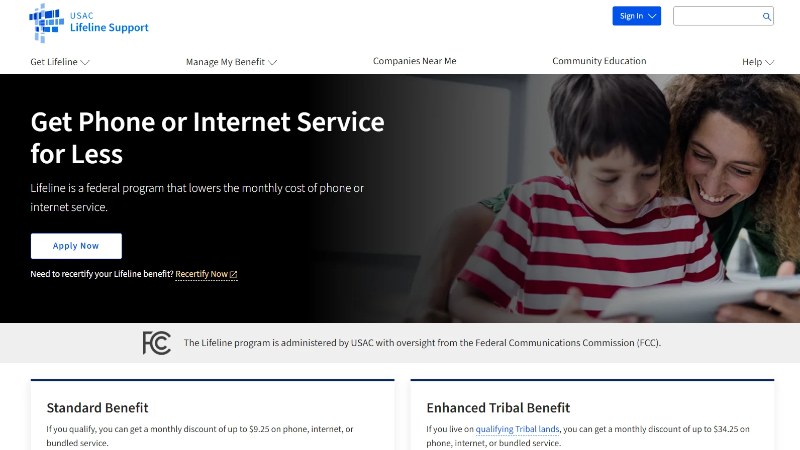
Follow these steps to explore your options:
- Visit the official Lifeline website. Start at LifelineSupport.org to review legitimate program information and application resources.
- Check your eligibility. Determine whether you qualify through SNAP, Medicaid, SSI, federal housing assistance, qualifying Tribal benefits, or the applicable income requirements.
- Prepare the required documents. Gather identification details, address information, and evidence of qualifying income or government benefit participation if requested.
- Complete the application. Follow the instructions on the official Lifeline application page. Most states use the National Verifier, while certain states follow separate procedures.
- Respond to verification requests. If your information cannot be verified automatically, submit the requested supporting documents through the authorized application process.
- Find participating providers. Use the official Companies Near Me directory to locate telecommunications companies serving your area.
- Compare available phone offers. Review monthly charges, coverage, data limits, available devices, and any equipment-related fees before selecting a company.
- Enroll and activate your service. Complete the provider’s enrollment procedure and follow its instructions for activating a SIM card, transferring an existing number, or receiving a device.
Keep in mind that an eligibility determination does not automatically activate phone service. Approval timelines, document checks, and device availability may vary. Consequently, applicants should maintain copies of important confirmations and communicate directly with their chosen provider.
How SNAP and Medicaid recipients can keep Lifeline benefits
Qualifying through SNAP or Medicaid can make the application process more accessible, but continued eligibility remains important. If your household no longer participates in the qualifying program or your income changes substantially, your Lifeline eligibility may also change.
In addition, subscribers are generally subject to annual eligibility verification. When automated checks cannot confirm continued qualification, USAC may request updated documentation. Responding within the specified period helps prevent unnecessary service interruptions.
Another important rule concerns inactivity. Subscribers receiving Lifeline-supported service without a monthly charge generally must use it at least once every 30 days. If the service remains inactive, the provider may issue a notice and eventually discontinue the benefit according to program rules.
Are Lifeline free phone options worth considering in 2026?
For eligible households, Lifeline can reduce recurring communication expenses while maintaining access to important services. A more affordable mobile connection can support employment searches, healthcare communication, online banking, educational resources, and everyday family needs.
Nevertheless, the most valuable option depends on the provider’s actual offer. Some companies may include promotional smartphones, while others focus on discounted service or compatible-device plans. Consumers should carefully review restrictions, network coverage, and potential charges before enrolling.
It is also important to avoid websites promising guaranteed approval or specific expensive smartphones without clearly explaining eligibility conditions. Legitimate providers should offer transparent information about available services and direct consumers toward approved verification procedures.
Ultimately, Lifeline is worth exploring when it provides reliable communication at a sustainable cost. By confirming eligibility through official resources and comparing participating providers, households can make informed decisions without depending on misleading promotional claims.
Official sources and transparency
Program details:
Lifeline Support (USAC)
·
Eligibility
·
Participating companies.
This independent article is not affiliated with the U.S. government. Provider terms, availability, and federal rules may change.
Deixe um comentário