
Best Internet Speed Test App
Have you ever wondered why your internet seems slow at certain times of the day? The answer may be hidden in numbers you’ve never checked. With the growing dependence on stable connections for remote work, streaming, and online gaming, knowing exactly your internet speed has ceased to be curiosity and become an absolute necessity.
In this complete guide, we’ll explore the best options available on the market, from established tools like OpenSpeedTest to surprising alternatives that can transform your online experience. Get ready to discover features you never imagined existed and learn to extract the maximum from your connection.
See the 5 best apps to check internet speed
The current connectivity scenario demands much more than simply contracting an internet plan. With the exponential increase of connected devices in each residence, from smartphones and laptops to smart TVs and virtual assistants, demand for stable broadband has grown significantly.
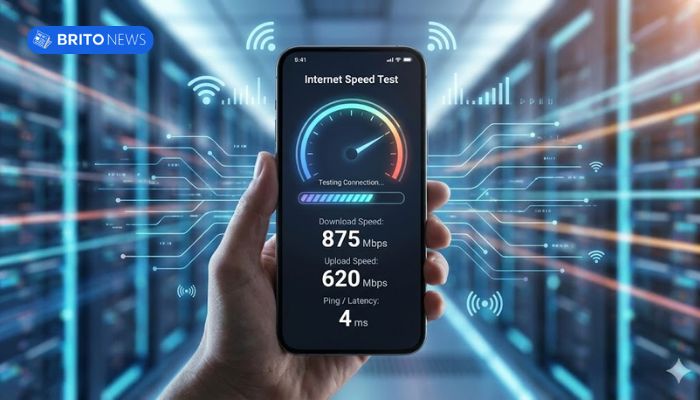
Check out now the 5 best speed test apps available:
The differential lies in its massive server network, ensuring you always find a test point near your location. It also functions as a storage file manager for results, organizing all your history accessibly.
Many IT technicians prefer this tool precisely for its open and verifiable methodology, without obscure algorithms manipulating results. The platform also offers options for companies wanting to host their own test servers internally.
Clicking “Show more info,” you access complementary upload and latency data. The differential lies in the methodology that simulates exactly real streaming conditions, revealing if your connection handles 4K or needs to settle for lower quality.
Its exclusive comparison feature lets you see how your connection ranks against other users in the same city, neighborhood, or operator. The app maintains detailed statistics over time, functioning as a complete document manager app for your network diagnostics.
When you need to test your speed thinking about specific daily practical uses, this tool offers incomparable insights beyond abstract numbers. The integrated best file manager of results organizes everything by date and test type, facilitating historical comparisons.
Gamers will probably benefit most from Meteor, which shows exactly how the connection affects their favorite games. The important thing is to choose the one that best adapts to your needs and use it consistently to track your connection’s evolution over time, building a valuable data history.
How to Use Speedtest by Ookla: Complete Step-by-Step Guide
Mastering the use of Speedtest by Ookla is fundamental for those wanting to test your speed with maximum precision and reliability. This app, considered a worldwide reference in internet speed measurement, offers powerful features that many users don’t know about. Before starting any test, it’s important to prepare your digital environment properly to ensure results reflecting the real capacity of your connection.
The complete process involves from correct installation to intelligent interpretation of obtained data, passing through settings that can make all the difference in measurement precision.
- Download and Installation: Access your device’s official store (Google Play Store for Android or App Store for iOS) and search exactly for “Speedtest by Ookla”. Verify the listed developer is “Ookla” to avoid fake apps imitating the original. After locating the correct app, tap install and wait for complete download. The app is lightweight and doesn’t consume much storage space.
- Necessary Permissions: On first run, the app will request device location access. This permission is optional but highly recommended as it allows automatically identifying nearby servers for more accurate tests. You can choose “Allow only while using” for greater privacy. No other sensitive permission is necessary for basic functioning.
- Initial Configuration: Before the first test, access settings by tapping the gear icon. Manually configure preferred server if desired, choose between multiple connections (recommended for fiber optic) or single connection (ideal for specific diagnostics). Enable or disable automatic result saving according to your privacy preference.
- Environment Preparation: Close all background apps that may consume bandwidth, including streaming services, active downloads, and cloud sync. If possible, connect your device via Ethernet cable or position yourself near the router. Ensure other devices on the network aren’t performing intensive activities.
- Running the Test: On the main screen, tap the large “GO” or “START” button. The app will first measure ping (latency), then download speed, and finally upload. The entire process takes between 30 seconds and 1 minute depending on your connection. Don’t interrupt the test and keep the app in foreground.
- Interpreting Results: Analyze not only raw speed but also ping (ideal below 50ms for gaming), jitter (ping variation, the lower the better), and consistency between multiple tests. Compare obtained values with your contracted plan, remembering that fluctuations up to 20% are considered normal by most regulations.
Following this step-by-step guide, you’ll have complete mastery over the market’s most popular speed measurement tool. Remember to perform tests at different times of day to build a complete picture of your connection’s behavior.
Why Monitoring Your Internet Speed is Fundamental
Performing an internet health test regularly goes far beyond simple technical curiosity or enthusiast hobby. When you monitor your connection consistently, you create valuable history that can be used to negotiate with your provider, identify problems before they become critical, and optimize bandwidth distribution among devices in your home or office.
Imagine discovering your internet drops drastically always at 8 PM, exactly when you need to participate in important meetings: with this data in hand, you can contact your provider with concrete evidence or simply schedule critical activities for more favorable hours.
From a practical and financial perspective, knowing your real speed impacts important daily decisions affecting your productivity and quality of life. Professionals depending on video calls can adjust video quality to avoid embarrassing freezes in important presentations. Gamers can choose servers with lower latency, drastically improving their competitive experience.
Extra Tips to Better Enjoy Your Speed Test
Performing a speed test seems simple at first glance, but there are important nuances that can drastically distort your results if not observed carefully. Many users get frustrated seeing inconsistent numbers between consecutive tests, without realizing that small adjustments in the process can reveal your connection’s true performance.
- Close absolutely all background apps: Programs that update automatically, cloud services syncing files, browser tabs playing videos, and even email checkers can consume significant bandwidth during the test without you noticing. Before know my speed with real precision, close everything non-essential for the test. This includes pausing active downloads, completely closing torrent clients, temporarily disabling automatic backups from Google Drive, iCloud or OneDrive, and verifying there are no system updates in progress.
- Prefer wired connection whenever possible: Wi-Fi, however convenient and advanced, introduces unpredictable variables that can mask the real speed delivered by your operator. Walls, interference from other electronic devices, running microwaves, cordless phones, and router distance significantly affect obtained results. Connecting your computer directly to the modem via Ethernet cable completely eliminates these variables and shows exactly what your operator is delivering to your residence.
- Restart your equipment before important tests: Routers and modems accumulate cache, logs, and residual connections that can cause slowness after long periods continuously on. A quick 30-second restart cleans temporary memory and reestablishes fresh connections with operator servers. This simple step, frequently ignored, can reveal surprising speed gains being wasted by overloaded equipment.
- Perform multiple tests at strategically different times: Internet speed naturally fluctuates throughout the day according to collective demand in your region and operator infrastructure. Testing only once, at a single moment, doesn’t offer complete vision of your situation. Make measurements early morning, mid-afternoon, and night after 8 PM to understand your connection’s real pattern. Tools like OpenSpeedTest allow scheduling automatic tests to create a complete panorama without manual effort.
- Choose test servers strategically according to your objective: Most apps allow manually selecting the server used in the test. Choosing a geographically close server generally offers the best numerical results, but testing with distant or international servers can reveal how your connection behaves accessing content hosted outside the country, something crucial for those using global services like American Netflix or games with European servers.
- Systematically document all your results: Maintaining an organized historical record of tests facilitates identifying patterns, degradation trends, and anomalies deserving investigation. Some apps offer integrated storage file manager features to organize results automatically, but you can also create a simple spreadsheet with date, time, download, upload, and ping. This data is extremely valuable in formal disputes with providers or to justify plan upgrades for your company’s management.
- Test on multiple devices to isolate problems: Sometimes, perceived slowness isn’t in the connection itself, but in a specific device with hardware problems, outdated software, or incorrect configuration. Performing parallel tests on different devices helps quickly isolate the problem’s origin. If your laptop presents consistently low speed but the smartphone marks normal values connected to the same network, the problem is probably in the laptop and not the internet.
Consistently implementing these practices will transform your speed tests from mere occasional curiosities into truly powerful diagnostic tools. With data correctly collected over time, you gain solid and documented arguments to demand quality from your provider, intelligence to optimize your home or business network, and peace of mind knowing exactly what you’re receiving for the value you pay monthly.
Important Care and Alerts When Testing Your Speed
Despite the apparent simplicity of speed tests, there are dangerous traps that can compromise not only your results but also your device’s security and personal data. The first and most critical alert involves fake apps proliferating in official stores: criminals create convincing imitations of popular tools like Speedtest and OpenSpeedTest, inserting malware, aggressive adware, or sensitive data collection mechanisms.
Certain providers configure their networks to automatically prioritize traffic destined for known test servers, making your connection appear faster during measurements than it really performs in daily use with streaming, downloads, and browsing.
If any app requests access to contacts, camera, microphone, SMS, or personal files, uninstall immediately as it’s certainly malicious software in disguise. Always maintain a reliable and separate cloud file manager for your important files, never granting unnecessary access to apps of dubious origin.
Benefits and Advantages of Regularly Monitoring Your Connection
Incorporating the habit of performing an internet health test frequently brings tangible benefits going far beyond simply knowing an abstract number of megabits per second. We’re talking about a fundamental posture change that transforms you from passive user, hostage to operator decisions, into active and informed manager of your own connectivity.
- Real negotiation power with operators: By presenting a documented and organized history of speeds consistently below contracted, you gain concrete and irrefutable arguments to request proportional discounts, free plan upgrades, or even cancel your contract without penalty for proven contractual breach.
- Early identification of technical problems: Gradual and progressive speed drops frequently indicate problems with aging equipment, degraded cables, or operator infrastructure needing maintenance. Detecting these trends early allows resolving situations before total failure that would leave you completely without internet at a critical moment.
- Intelligent router positioning optimization: Testing speed at different points in the house or office reveals precisely Wi-Fi shadow zones where signal arrives weak or unstable. With this mapped data, you can strategically reposition equipment, invest in signal extenders only where really necessary, or discover that a simple router channel change solves problems that seemed to require spending on new equipment.
- Informed financial decisions about upgrades: Before contracting a more expensive plan thinking it will solve your slowness, verify if your current speed already objectively meets your real needs. Often, subjectively perceived slowness comes from other factors like poorly configured Wi-Fi, old devices, or interference, problems that a simple plan upgrade won’t solve and will only unnecessarily increase your monthly bill.
- Significant improvement in remote work experience: Home office professionals can use speed data to adjust important virtual meeting schedules for moments of proven better connectivity, drastically reducing freezes and negative impressions caused by technical problems in video calls with clients, bosses, or business partners.
- Detection of unauthorized devices on network: Unexplained and sudden speed drops may indicate neighbors discovered your Wi-Fi password or that devices infected with malware are consuming your bandwidth for malicious activities. Constant monitoring helps detect these invaders quickly, protecting both your speed and digital security.
The sum of these benefits represents a complete transformation in your relationship with the internet, moving from passive consumer to conscious and empowered user. The investment of a few minutes weekly in regular tests returns in financial savings, increased productivity, fewer technical frustrations, and the peace of mind of knowing exactly what’s happening with your connection at any moment.
What to Observe Before Choosing the Best App for You
Choosing the ideal app to know my speed fundamentally depends on your specific usage profile and the objectives you want to achieve with tests. Casual users who just want a quick occasional verification can be perfectly satisfied with Netflix’s Fast.com, which doesn’t require installation, registration, or any previous configuration.
IT professionals, network administrators, and technology enthusiasts will probably prefer the analytical depth and advanced features offered by nPerf, or the methodological transparency and open-source nature of OpenSpeedTest that allows auditing exactly how measurements are performed.
Also consider the interface, usage experience, and complementary features each tool offers beyond the basic test. Some apps work better as a best file manager of results, maintaining detailed histories organized and easily accessible for comparisons over months or years. Others focus on extreme simplicity and execution speed, sacrificing advanced features for instant ease of use.
Deixe um comentário