
A failure method involving Bright Money
In recent years, personal finance management apps have gained enormous traction in the lives of American consumers. Among them, Bright Money has stood out as one of the most talked-about platforms, whether for its innovative automated savings features,
The concept of “hidden cash flow managers” is rarely discussed outside of specialized circles. These are functionalities that operate automatically in the background, without the user’s knowledge, such as automatic transactions, payment rescheduling, and silent transfers.
If you’ve ever wondered why your account has unexpected charges, unauthorized transfers, or simply stopped working without warning, this article is for you.
Why Bright Money is at the center of financial discussions
The fintech market targeting middle-class American consumers has never been hotter. Terms like debt payoff automation , AI-driven budgeting , credit utilization optimization , and savings goal tracking are part of the vocabulary of those seeking financial health without relying on expensive advisors.
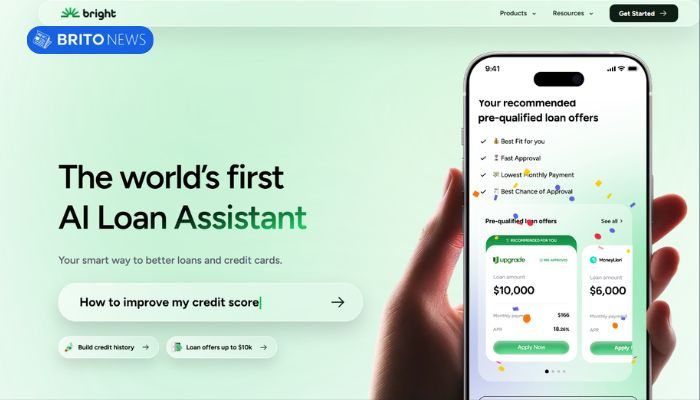
Below, you’ll find the main apps related to the Bright Money universe and how each one performs in practice:
- Bright Money: The original bright money . It works as an automated credit card debt manager, connected to your bank account via Plaid. Its distinguishing feature is the use of artificial intelligence to decide when and how much to pay on each card.
- Brightside Money: Brightside Money focuses on corporate benefits and employee financial health. Unlike traditional Bright Money, it operates as a document manager app linked to the company’s HR department, managing benefits, salary advances, and financial education.
- Bright Money Savings (internal feature): The bright money savings module is one of the most promising—and also most problematic—features.
- Bright Money Co (Bright Financial): Bright Money Co is the entity behind the application. It also acts as a cloud file manager for financial data, storing transaction history, progress reports, and user goals.
- Digit: Works like a savings file manager , moving pennies daily to a separate account. It’s more conservative than Bright Money and less prone to overdrafts.
- Chime: A banking fintech that offers bright money saving features without the complexities of AI. Ideal for those who want simplicity, without deep automation. It has no monthly fees and offers overdraft coverage of up to $200 for eligible users.
- Dave: Focused on salary advances and overdraft prevention. Works as a complement to any of the above applications, especially for users facing irregular cash flow. Its subscription model costs only $1/month and does not require a minimum credit score.
Each of these apps plays a specific role in the digital financial ecosystem. None of them are perfect — and understanding the differences between them is the first step in avoiding the most common mistakes Bright Money users make. The next section will show you how to use the platform safely and efficiently.
Does Bright Money require a subscription?
Bright Money: This is an important question for those researching financial apps, debt management, credit scores, and digital financial planning. According to the official website, Bright has a free Basic version and a Premium subscription with paid plans, which may include features such as credit monitoring, budget planning, and credit building solutions.
Before using the app, it’s worth carefully analyzing which functions actually require payment, since Bright itself states that Premium Membership is not mandatory for offers like Bright Builder or Personal Loan. Therefore, understanding the plans, prices, and renewal conditions can help users avoid unexpected charges and more confidently choose the best path for their financial life.
How to use Bright Money safely: step by step
First and foremost, it’s important to understand that Bright Money is not a bank—it’s a debt management service that operates within your existing bank account. This distinction is crucial to avoid unpleasant surprises.
See how to configure and use the platform correctly:
- Visit the website: brightmoney.co
- Download and account creation: Available for free on the App Store and Google Play. Registration requires email, phone number, and connection to your bank account via Plaid. Activate two-factor authentication immediately after registration to ensure the security of your financial information.
- Bank connection: The app requests read and write access to your checking account. Carefully read what permissions are being granted. Write access is what allows automatic transfers — and this is where the main risk of the most frequently reported failure method lies.
- Setting up a balance protection: Before activating any automation, set a minimum balance protection. We recommend at least $300. This setting prevents the app from making transfers when your balance falls below what’s needed to cover fixed expenses.
- Gradual activation of modules: Don’t activate everything at once. Start with expense tracking for 30 days. Then, activate the bright money savings module . Finally, consider automatic debt repayment transfers only when you are confident about your cash flow.
- Weekly monitoring: Access the dashboard at least once a week. Check if the transfers made make sense with your current cash flow. In months with extra expenses — taxes, insurance renewal, vehicle repair — manually pause the automations to avoid surprises.
Following this roadmap doesn’t eliminate all risks, but it significantly reduces the chance of encountering the failure methods most frequently reported by platform users. Active control is always superior to passive automation when it comes to real money.
Why this is important for your financial health.
Ignoring the weak points of a financial application can have real and lasting consequences. An overdraft caused by a poorly programmed automatic bright money transfer can generate bank fees of $35 or more — a direct loss that negates weeks of automated savings.
Furthermore, when the app attempts to pay a credit card and the transfer fails due to insufficient funds, the result may be a late payment — directly impacting the credit score.
Users who have reported a drop of 20 to 40 points in their FICO Score due to Bright Money processing failures are not uncommon. Understanding how the platform works internally is, therefore, a form of active financial protection—not just a technical curiosity.
Extra tips to make the most of Bright Money and save more.
Bright Money has real potential to transform people’s relationship with their debts and savings. But, like any powerful tool, it requires the user to know exactly how to use it.
The following tips were compiled based on real user experiences, specialized forums, and analyses from personal finance experts—and each one can represent concrete savings or financial protection in your daily life:
- Sync all your cards, not just one: The app is more efficient when it has complete visibility of your debt profile.
- Use the separate savings goals feature: The bright money saving module allows you to create specific goals, such as an emergency fund, travel, or car replacement.
- Take advantage of cashback bonus periods: Some cards offer temporary cashback in specific categories.
- Explore the monthly PDF reports: A bright money co generates detailed reports that function as a true document manager app for your financial health.
- Align your app transfers with your payslip schedule: Mentally sync, or use a calendar app, the dates Bright Money typically makes transfers with your payslip dates.
- Review the app’s permissions every six months: Just as you would review a bank contract, periodically review what permissions Bright Money has over your account.
Applying these tips transforms Bright Money from a potentially problematic tool into a consistent ally on your financial journey. The secret lies in active control—not passive reliance on automation.
Important precautions and warnings before fully trusting the app.
There are real risks that need to be clearly named. The main one is the timing failure method : the app executes transfers based on historical patterns, but it cannot predict emergency expenses.
If you need an urgent renovation, a medical procedure, or vehicle repairs, the app can continue automatically transferring money while your account is depleted. Pause the automations whenever you anticipate an unusual expense.
Another point to be aware of is fake apps that mimic the Bright Money interface. Always download the app directly from official app stores and verify that the developer is “Bright Credit Inc.” before installing.
Benefits and advantages of real money when used correctly.
When properly configured and monitored regularly, Bright Money offers concrete advantages that justify its growing popularity. The benefits below were observed by users who kept the app active and well-configured for at least three months—the minimum time for the algorithm to learn their financial patterns and begin working in a truly optimized way:
- Accelerated credit card debt reduction: The AI algorithm distributes payments in a mathematically optimized way, reducing debt repayment time by up to 30% compared to traditional minimum monthly payments.
- Automated savings without conscious effort: The bright money savings module removes the need for manual discipline. Savings happen before you have a chance to spend—a powerful psychological principle known as pay yourself first , recommended by virtually all personal finance experts.
- Real-time financial visibility: The app’s dashboard brings together information from multiple accounts in one place, functioning as a true cloud file manager for your financial life. You can clearly see balances, debts, goal progress, and transfer history without having to switch between multiple apps.
- Progressive improvement in credit score: By maintaining low credit utilization and on-time payments — two of the main factors in the FICO Score — consistent Bright Money users report improvements of 40 to 80 points in their score over 12 months of regular use.
- Competitive cost-benefit ratio: Compared to traditional financial advisors or premium apps like YNAB, Money Bright offers a freemium model with robust features at no upfront cost — a significant advantage for those starting to organize their finances and who don’t yet want to commit their budget to subscriptions.
These benefits are real — but they depend directly on careful setup and an active user approach. The app doesn’t replace human judgment; it enhances it when used consciously and regularly.
What to consider before choosing the best app for you.
The choice between Bright Money and its alternatives should take into account your specific financial profile. If you have multiple credit cards with high interest rates and want to automate payments, Bright Money is one of the best options on the market.
If, on the other hand, you have irregular cash flow or rely on frequent emergency reserves, it may be more prudent to start with a more conservative alternative, such as Chime or Digit, before migrating to a platform with more aggressive automations.
Explore other articles here on the site to compare fintechs, understand how credit scores work in the US, and discover savings strategies that go beyond apps.
Deixe um comentário