
How Americans are getting free tires
In the United States, having your car out of service due to worn tires can become an immediate financial problem, especially for those who depend on their vehicle to work, take their children to school, go to the doctor, or carry out essential routines.
At the same time, this search is often accompanied by a lot of misinformation. There are confusing ads, outdated promotions, pages that seem too generous, and offers that change depending on the region, stock, and store policy.
Without a clear plan, the driver wastes hours searching, clicks on unreliable links, and ends up unsure whether to look for donations, discounts, good used tires, community aid, or promotional campaigns from automotive networks.
What does it really mean to get free tires in the USA?
When someone searches for “how to get free tires in the United States,” they are rarely talking about a standardized public benefit that provides new tires to any driver.
In practice, this search usually points to five possibilities: community donations, free used tires, help from churches and charities, local emergency programs, and aggressive commercial promotions that greatly reduce the final purchase price.
Understanding this detail changes everything, because it avoids frustration. If you limit your search to just the idea of winning four new tires without any return, your chances of success drop considerably.
A real step-by-step guide to trying to get tires for free or at minimal cost.
If the goal is to move beyond theory and proceed with a methodical approach, it’s worthwhile to follow a clear sequence. This avoids poorly formulated requests, wasted time on irrelevant links, and hasty decisions based on offers that only seem good at first glance.
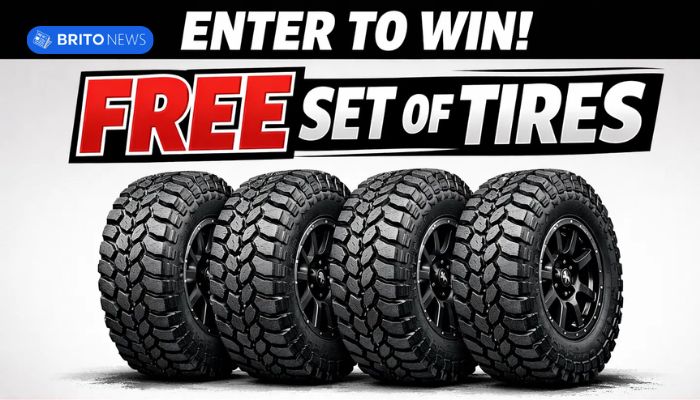
- Visit the website: freeservicetire.com
- Check the exact tire size: Before seeking any help, write down the specification correctly. In more technical searches, terms like “8 flat free tire” and “38×24 tires” appear, showing how the size completely influences the result.
- Define what you really need: Do you need one tire for emergencies, two to stabilize the car, or a complete set? Knowing this avoids unrealistic requests and improves your communication.
- Research safe used tire options: Often, the most viable option isn’t a free new tire, but rather free used tires or a nearly new tire in good condition from a local shop or private donor.
- Reach out to churches, nonprofits, and local groups: Explain how you use the car, why replacing it is urgent, and what solution you are seeking. Objective messages tend to generate a better response.
This simple script already greatly improves the quality of the search. Instead of being stuck with an abstract desire to “win tires,” you start operating with criteria, context, and real comparison.
How does finding tire repair help work without paying a fortune?
The search for affordable tires typically relies on three avenues: community support, good-quality used tires, and aggressive promotions from specialty tire shops in the United States.
Instead of relying on a single solution, the driver compares local offers, checks seasonal campaigns, and looks for alternatives such as free used tires , targeted discounts, and even promotional deals with shipping included.
This move is important because it reduces the financial impact without completely compromising mobility, which is essential for those who depend on their car to work and maintain their routine.
Those who usually have a better chance of getting support
Not every request receives a positive response, but some profiles tend to be more readily accepted by charities, churches, aid groups, and even local promotional programs. This is because the narrative of need carries significant weight in the American community environment.
Among the profiles that usually receive the most attention are:
- drivers who use their car to work and earn an income;
- Families with young children and limited mobility;
- Delivery workers, home care staff, cleaning staff, and field service workers;
- People undergoing frequent medical treatment;
- veterans, first responders, and groups with specific local benefits;
- Residents assisted by churches or community organizations.
That’s precisely why searches like “tire discounts for first responders” are gaining traction. Instead of waiting for a random donation, many users are trying to find out if their professional category can grant them access to a more advantageous commercial offer.
How to interpret promotions without falling into traps
Interpreting tire promotions without falling into traps requires a more strategic reading of the advertisement, because the advertising emphasis almost always highlights the main benefit and pushes the crucial details into smaller print.
Before trusting promotions like “buy 2 get 2 free” or “buy 3 tires get 1 for $1,” it’s ideal to carefully check the participating brand, eligible sizes, validity period, availability per unit, and any additional costs that can completely alter the final purchase price.
Continuing this analysis, the more attentive consumer compares the total price of the operation, including installation, balancing, disposal, taxes, and even logistical benefits such as wheel and tire packages free shipping.
Where to find free tires or real help in the United States
The first mistake many people make is thinking that everything can be solved on a single website. In the US, solutions are usually spread across different channels. Some opportunities arise on neighborhood platforms.
- Local churches and charities
- Many have emergency funds or volunteer networks.
- They don’t always donate the tire, but they can point you to someone who can help.
- Nonprofits focused on mobility and work.
- Some organizations help people who depend on their car to keep their job.
- This type of support can come in the form of repairs, vouchers, or connecting you with a local partner.
- Tire shops and independent repair shops
- In several cities, these stores store used tires in good condition.
- When they perceive a real need, some owners make things much easier.
- Marketplaces and community groups
- Facebook Marketplace, Craigslist, and neighborhood groups can yield relevant finds.
- In this environment, the search for free used tires tends to be very strong.
- Retail chains with seasonal promotions
- Some campaigns significantly reduce the price per unit.
- Not everything that seems “free” is advantageous, so comparison is essential.
This mix of channels works better than relying solely on cold Google searches. In the United States, a large portion of real opportunities arise from the intersection of community, local retail, and promotional timing.
Are used tires a good solution?
Within the American context, used tires can indeed represent a functional solution, especially when a person needs to get their car back on the road without compromising their entire budget.
The condition for this is simple: the tire needs to be in safe condition and evaluated with common sense. Not all used tires are a problem, just as not all cheap tires are an advantage.
This is where the search for free used tires becomes relevant. Many people are able to resolve emergencies with tires that someone else removed before they reached their maximum usable lifespan.
Common mistakes that cause people to spend more than they should.
When the need arises, the most common mistake is impulse buying. But in the world of tires, rushing without criteria almost always comes at a high price. Some people accept any “free” offer, some ignore the correct size, and some confuse promotional campaigns with real benefits.
- Do not confirm the tire size before seeking assistance;
- Accepting used items without checking safety;
- Enter old, expired ads;
- Do not calculate additional fees and services;
- Focusing solely on large chains and ignoring local businesses;
- Disregard discounts based on professional category;
- Do not compare package deals with shipping costs versus individual unit purchases.
Phrases like “buy 3 tires get 4 free” or “buy 3 tires get 1 for $1” need to be read carefully, because the final price depends on specific rules and added costs.
Technical research is also part of the journey.
Not every user is looking for a regular passenger car tire. There are cases of specific, technical searches, which completely changes the market being consulted.
Terms like flat free skid steer tires, 8 flat free tire, and 38×24 tires show that some consumers need solutions for machinery, equipment, utilities, or less standardized measurements.
The more specific the measurement, the more important it becomes to move away from generic options and turn to specialized suppliers, workshops with local inventory, and heavy equipment groups.
How to ask for help the right way.
In the United States, well-formulated requests tend to work better than overly emotional or vague messages. The strongest approach is usually short, honest, and practical. You don’t need to create a dramatic narrative; you need to show the problem, the urgency, and the solution you’re looking for.
An efficient order structure could follow this pattern:
- Explain what the vehicle depends on;
- Please provide the tire size;
- Please specify if you need new, used, or partial assistance;
- Please mention your city or region;
- Ask if the person knows someone who can help.
This format conveys seriousness and makes it easier for those who can donate, sell cheaply, or provide another contact to respond.
Is it more worthwhile to search for free or to look for a significant discount?
For some consumers, options like free shipping on wheel and tire packages significantly reduce the final cost.
For others, specific discounts or campaigns like “buy 2 get 2 free” discounts can deliver a much more competitive cost per tire than waiting for an unlikely donation.
In short, the best answer isn’t always the same. The intelligent driver compares real-world scenario, urgency, safety, size, and local availability before deciding.
Closing the strategy
Finding out how to get free tires in the United States is less about finding a miracle benefit and more about combining community, promotion, timing, and practical market analysis. In some cases, the solution will come through free used tires .
In other cases, it will appear in seasonal campaigns, packages with reduced shipping, professional discounts, or organized local support. The more specific and honest your search, the better your chances of finding a viable alternative.
The next step is simple and straightforward: confirm your measurements, decide if you’re looking for a used item, a discount, or a donation, activate your local network, and compare offers with a cool head. In the US, real savings usually appear for those who research methodically, read the details, and avoid falling for promises that are too easy to sell.
Deixe um comentário